When planning a home, office, commercial establishment, or industrial facility, many people turn to Vastu Shastra to create spaces that promote harmony, prosperity, and well-being. At the heart of this ancient architectural science lies the concept of Vastu Purush—a symbolic cosmic being whose position forms the basis of Vastu planning.
If you’ve ever wondered “Who is Vastu Purush?” or “What is Vastu Purush in Vastu Shastra?”, you’re not alone. Understanding the role of Vastu Purush helps explain why different directions in a property are assigned specific purposes and how these principles influence architectural design.
Whether you are building a new home, purchasing a property, or simply curious about Vastu, learning about Vastu Purush, the Vastu Purusha Mandala, and its significance can provide valuable insights into creating balanced and positive living spaces.
In this guide, we’ll explore the origin of Vastu Purush, his role in Vastu Shastra, and why his symbolic presence continues to influence modern architecture and home planning.
Vastu Purush is regarded as the symbolic guardian and spiritual embodiment of every piece of land and built structure. In Vastu Shastra, he represents the cosmic energy that occupies a site before and after construction. Rather than being viewed as a physical entity, Vastu Purush symbolizes the balance between nature, the five elements, and the built environment.
Simply put, Vastu Purush is the energetic blueprint upon which Vastu principles are based. His position determines how different areas of a property are interpreted and utilized.
Every room in a building—whether it is a bedroom, kitchen, entrance, prayer room, office, or storage area—is planned with reference to the position of Vastu Purush. This ensures that the space aligns with natural energy flow and supports the occupants’ health, happiness, and prosperity.
The concept has been followed for centuries by architects, temple builders, town planners, and Vastu consultants across India. Today, it continues to guide residential, commercial, and industrial construction projects.
One of the reasons Vastu Purush in Vastu Shastra remains relevant is that it represents the interconnected relationship between humans, architecture, and nature.
According to traditional Vastu philosophy, every direction carries a unique type of energy. Vastu Purush symbolizes how these energies interact within a structure, helping architects and homeowners design spaces that feel balanced, functional, and comfortable.
Instead of focusing solely on aesthetics, Vastu emphasizes creating environments that support physical comfort, mental peace, productivity, and overall well-being.
The Vastu Purush story originates from ancient Hindu scriptures and mythology. While different texts describe the story with slight variations, the central concept remains the same.
According to Vastu Shastra, a powerful cosmic being emerged during a divine event. His enormous size and immense energy began affecting the balance of the universe. Concerned about this disturbance, the gods united to restrain him.
They gently pinned the being face down upon the earth, with each deity occupying a specific position on his body. These divine forces blessed him with an important role: every structure built on Earth would acknowledge his presence and respect his position.
From that point onward, he became known as Vastu Purush, the guardian spirit of all land and buildings.
This symbolic story explains why Vastu Shastra assigns different deities and energies to different sections of a property. Rather than being merely mythological, the story serves as a framework for understanding the relationship between space, direction, and energy.
References to Vastu Purush mythology can be found in several traditional architectural texts and scriptures that discuss sacred geometry, temple construction, and residential planning.
Ancient architects believed that every construction project should begin with respect for the natural energy of the land. This philosophy eventually evolved into the structured system now known as Vastu Shastra.
Over centuries, these principles became integrated into:
Even today, many architects combine these traditional concepts with modern engineering practices to create spaces that are both practical and energetically balanced.
Although the story has mythological roots, its deeper message is about living in harmony with nature.
The origin of Vastu Purush reminds us that every structure interacts with its surroundings. Factors such as sunlight, wind direction, ventilation, open spaces, and room placement all influence how a building functions.
Modern Vastu consultants often interpret the symbolism of Vastu Purush alongside architectural science, environmental design, and practical planning rather than relying solely on mythology.
This balanced approach makes the principles relevant even in today’s urban apartments, offices, and commercial developments.
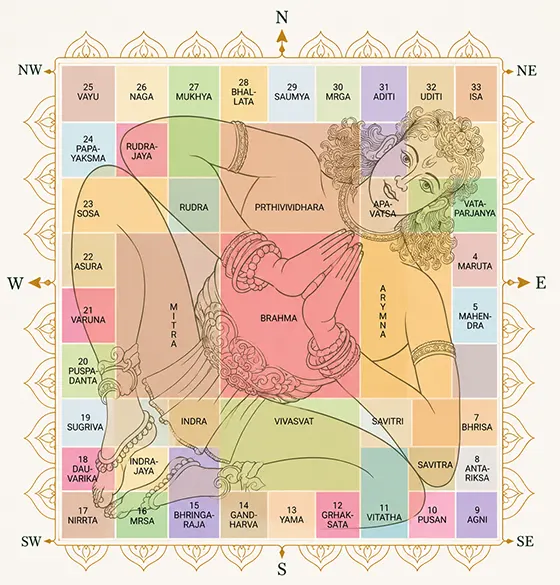
One of the most important concepts in Vastu Shastra is the Vastu Purusha Mandala. If Vastu Purush is the symbolic cosmic being, then the Mandala is the architectural map that represents his body.
The Vastu Purusha Mandala is a geometrical grid used to divide a plot or building into multiple squares. Each square corresponds to a specific deity, natural force, or type of energy.
This sacred layout serves as the foundation for planning:
In simple terms, the Mandala acts as a blueprint that helps architects and Vastu consultants decide where different rooms and functional spaces should ideally be located.
The Mandala is typically represented as a square divided into equal sections. Depending on the complexity of the project, it may consist of grids such as 8×8 (64 squares) or 9×9 (81 squares), with each section associated with particular energies and traditional deities.
At the center of the grid lies the Brahmasthan, considered the heart of the structure. This area is traditionally kept open, clean, and free from heavy obstructions to encourage the smooth circulation of energy throughout the building.
Around the central zone, each direction is assigned different functional uses based on Vastu principles. For example:
These directional recommendations are based on centuries of Vastu philosophy and are adapted according to the specific design and purpose of a building.
Understanding the Vastu Purush Mandala explained helps homeowners appreciate that Vastu is much more than room placement. It is a comprehensive planning system that seeks to balance natural elements, directional energies, functionality, and architectural design.
Rather than treating every property the same, experienced Vastu consultants evaluate the Mandala alongside factors such as plot shape, orientation, structural layout, and the occupants’ requirements to provide practical, customized recommendations.
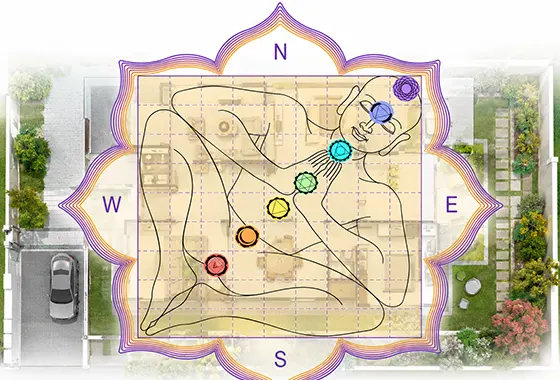
One of the most fascinating aspects of Vastu Purush in Vastu Shastra is his symbolic position within the Vastu Purusha Mandala. According to traditional Vastu principles, Vastu Purush lies face down across the plot, with his body aligned to specific directions. This orientation serves as the basis for determining the ideal placement of rooms, entrances, utilities, and open spaces.
While the exact orientation may vary slightly depending on traditional texts and seasonal interpretations, the widely accepted representation places:
This symbolic positioning is not arbitrary. Each direction is associated with one of the five elements of Vastu Shastra—earth, water, fire, air, and space—and carries unique energetic qualities that influence how different areas of a building are planned.
In Vastu Shastra, directions are believed to influence the natural movement of sunlight, air circulation, temperature, and environmental balance. Ancient architects observed these natural patterns long before modern building science became widespread.
For example:
These recommendations aim to create a practical and harmonious environment by combining natural environmental factors with traditional Vastu wisdom.
Many homeowners ask, “Why is Vastu Purush important in house construction?” The answer lies in the role he plays as the foundation of Vastu planning.
Before designing a residential or commercial property, Vastu consultants often analyze the site’s orientation and prepare recommendations based on the Vastu Purusha Mandala. This helps ensure that each area of the building is positioned to make the best use of natural light, ventilation, and directional balance.
The role of Vastu Purush in home design extends beyond traditional beliefs. It provides a structured framework for organizing spaces in a logical and functional manner.
Architects and Vastu consultants use these principles to determine the placement of:
Rather than treating every home identically, experienced consultants consider the property’s orientation, plot dimensions, surrounding environment, and the family’s specific needs before providing recommendations.
Modern construction involves structural engineering, municipal regulations, sustainability, and client preferences. Vastu principles are therefore integrated wherever practical, without compromising safety or functionality.
For example, if an ideal room placement is not feasible due to structural limitations, experienced Vastu consultants may suggest practical design adjustments or non-structural Vastu remedies instead of recommending major alterations.
This balanced approach makes Vastu relevant for both new construction and existing homes.
A common misconception is that Vastu applies only to traditional Indian homes. In reality, Vastu Purush and modern architecture can complement each other effectively.
Today’s homes, apartments, offices, and commercial buildings are designed using advanced construction techniques and contemporary aesthetics. However, many homeowners still prefer layouts that align with Vastu principles because they value organized spaces, natural lighting, ventilation, and functional planning.
The concept of how Vastu Purush influences house planning lies in encouraging thoughtful design rather than rigid rules.
Modern architects may use Vastu principles to:
These objectives align closely with many contemporary architectural practices, making Vastu increasingly relevant even in urban developments.
Many people believe they need to reconstruct their homes to follow Vastu. In most cases, this is not true.
Professional Vastu consultants often recommend simple improvements such as:
These changes can often be implemented without demolition or major renovation, making Vastu accessible for apartments, independent homes, offices, and commercial establishments.
Understanding what is the importance of Vastu Purush can help homeowners, architects, and property developers make more informed design decisions.
Some practical benefits include:
While Vastu is based on traditional principles, many of its recommendations also align with practical aspects of sustainable and user-centric design.
Q1. Who is Vastu Purush in Vastu Shastra?
Vastu Purush is the symbolic cosmic being regarded as the guardian of every plot and building in Vastu Shastra. His position forms the foundation of the Vastu Purusha Mandala, which guides the planning and design of homes, offices, and other structures.
Q2. Why is Vastu Purush important?
Vastu Purush is important because his symbolic orientation helps determine the ideal placement of different rooms and functional areas within a property. These principles aim to create balanced, practical, and harmonious living and working environments.
Q3. What is the Vastu Purusha Mandala?
The Vastu Purusha Mandala is a sacred geometric grid used in Vastu Shastra to plan buildings. It divides a plot into multiple sections, each associated with specific energies, directions, and traditional deities, helping architects and Vastu consultants create balanced layouts.
Q4. How does Vastu Purush affect house planning?
The concept of Vastu Purush influences house planning by guiding the placement of entrances, bedrooms, kitchens, living areas, prayer rooms, and other spaces according to directional principles. These guidelines aim to improve functionality, comfort, and energy balance within the home.
Q5. What direction does Vastu Purush face?
According to traditional Vastu beliefs, Vastu Purush lies face down on the plot with his head positioned towards the North-East and his feet towards the South-West. This symbolic orientation forms the basis for directional planning in Vastu Shastra.
Q6. Can Vastu principles be applied to modern homes?
Yes. Modern architects and Vastu consultants often integrate Vastu principles into contemporary homes, apartments, offices, and commercial spaces. In many cases, practical improvements and non-structural remedies can be recommended without requiring major reconstruction.
The concept of Vastu Purush is one of the most important foundations of Vastu Shastra. More than a mythological figure, Vastu Purush represents the harmonious relationship between nature, architecture, and human life. His symbolic position within the Vastu Purusha Mandala provides a timeless framework for planning homes, commercial spaces, and industrial facilities that are functional, balanced, and aligned with natural principles.
Whether you are constructing a new property, purchasing a home, renovating an office, or simply exploring the wisdom of Vastu, understanding the importance of Vastu Purush can help you make informed decisions about space planning and design. When combined with modern architectural practices, these principles continue to offer practical guidance for creating environments that support comfort, productivity, and overall well-being.
At Your Vastu Experts, we believe every property has unique characteristics and deserves personalized guidance rather than one-size-fits-all solutions. Our experienced Vastu consultants provide professional Residential Vastu Consultation, Commercial Vastu Consultation, and Industrial Vastu Consultation, along with practical Vastu remedies without demolition. Whether you need assistance with a new construction project or want to optimize an existing property, we’re here to help you create spaces that inspire harmony, prosperity, and lasting success.
Any trademark, brand name, or logo displayed on this website is solely for informational purposes to provide accurate and up-to-date details about the respective brand. Displaying such content does not imply any affiliation, endorsement, or partnership with the brand. All trademarks, names, and logos remain the property of their respective owners.
Transform your home and workspace with the power of Vastu. Our expert consultations help you align your environment for health, prosperity, and peace of mind.
© Your Vastu Experts
WhatsApp us