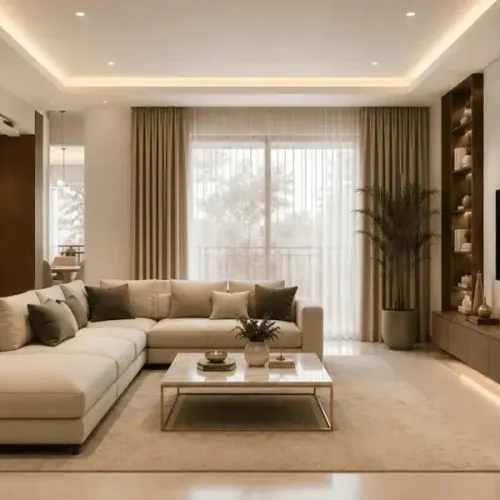
The North-East Direction in Vastu, traditionally known as Ishan Kon or Ishan Disha, is widely regarded as one of the most significant zones in Vastu Shastra. It is located where the North and East directions meet and is traditionally associated with clarity, openness, knowledge, spiritual awareness, prosperity, and positive movement.
The importance of the North-East is closely connected with the qualities of both the North and East. The North is traditionally associated with opportunities and financial movement, while the East is associated with the rising Sun, natural light, vitality, and new beginnings. Together, these qualities make the North-East a highly valued zone in traditional Vastu planning.
The North-East direction is especially important when planning a home, selecting a plot, designing a commercial property, or assessing an existing building. Many traditional Vastu principles recommend keeping this zone relatively light, clean, open, and free from unnecessary obstruction.
However, it is important to approach the subject sensibly. A North-East defect should not automatically be considered the cause of every difficulty in life. A property must be assessed as a complete system that includes its orientation, floor plan, construction, slope, room placement, natural light, ventilation, drainage, and actual usage.
Understanding the North-East Direction in Vastu can help homeowners make more informed decisions while planning their living environment.
The North-East is known as Ishan Kon in Vastu Shastra.
The word Ishan is traditionally associated with a divine and spiritually significant aspect of the natural environment. The North-East is considered a meeting point between the qualities of the North and East.
Symbolically, the direction represents:
The North-East is traditionally considered a direction that benefits from openness and cleanliness. This does not necessarily mean that every North-East area must be completely empty. Instead, the emphasis is generally on avoiding unnecessary heaviness, obstruction, clutter, and inappropriate construction.
In modern architectural terms, this preference can also be understood through the benefits of:
From a practical perspective, the North can also be viewed as a direction that benefits from careful planning for light, ventilation, accessibility, and movement. Keeping this area open and functional often makes a space feel more inviting and easier to use.
Jupiter and the North-East
The North-East is traditionally associated with Jupiter (Guru or Brihaspati).
Jupiter symbolises qualities such as:
This traditional association helps explain why the North-East is often considered suitable for activities connected with learning, meditation, prayer, reflection, and knowledge.
In a modern home, this may translate into a space that supports:
Ishana and the North-East
The North-East is traditionally associated with Ishana, a divine aspect connected with spiritual awareness and higher consciousness.
This association gives the zone an important place in traditional Vastu planning. However, its practical interpretation does not require a person to follow a particular religion or spiritual practice.
A clean, peaceful, naturally lit space can be beneficial to people of different backgrounds and beliefs.
The North-East is closely associated with the qualities of Water and Space in many Vastu traditions.
Water symbolises:
Space represents:
The North-East is therefore traditionally considered a zone that benefits from openness, lightness, and unobstructed movement.
This is one reason why water-related features are often associated with the North-East in traditional Vastu planning. However, adding a water feature is not automatically appropriate. Drainage, hygiene, maintenance, moisture, and the complete property layout must always be considered.

The North-East is traditionally connected with several important areas of life.
Knowledge and Education
The North-East is often considered favourable for learning and intellectual development.
A study area in this zone may benefit from:
A good study environment can support concentration, although academic performance naturally depends on many factors, including effort, teaching, health, and personal habits.
Mental Clarity
A bright and uncluttered environment can influence how spacious and calm a room feels.
The North-East is traditionally associated with clarity and awareness. In practical terms, a clean, well-lit space may help create a more comfortable environment for reflection and focused thinking.
Spirituality and Inner Reflection
The North-East is often associated with:
A calm space in this zone may be suitable for people who want a dedicated area for these activities.
Opportunities and Growth
Because the North-East combines the traditional qualities of the North and East, it is often associated with:
This should be understood as a traditional symbolic association rather than a guarantee of financial success.
Pooja Room
The North-East is traditionally considered one of the preferred locations for a pooja room.
A pooja or meditation area in this zone should ideally be:
The space should be designed according to the needs of the household rather than filled with excessive decorative objects.
Study Room
The North-East may be suitable for a study room in some layouts.
A good study space should provide:
The desk should be positioned to support comfortable reading and working rather than simply following a rigid rule.
Living Room
A living room may be suitable in the North-East depending on the size and layout of the property.
If the space is used as a living area, avoid making it excessively heavy with:
Keep the space open and easy to move through.
Entrance
A North-East entrance can be considered in traditional Vastu planning, but the exact position is important.
A good entrance should be:
The entrance should also be practical from a security and weather-protection perspective.
Meditation Area
A small meditation or quiet reflection area can work well in the North-East when the space is comfortable and peaceful.
Soft natural light, simple décor, and minimal visual clutter can help create a calming environment.
Staircase
A staircase creates significant visual and structural weight. For this reason, heavy staircase construction in the North-East may be considered unsuitable in many traditional Vastu layouts.
However, structural safety and practical building requirements must always take priority.
Garden and Open Space
The North-East is traditionally considered suitable for open space and landscaping in many Vastu layouts.
A garden or open area may help create:
Plants should be healthy and appropriate for the local climate.
Water Features
Water features are traditionally associated with the North-East in many Vastu interpretations.
However, a water feature should only be added if:
A poorly maintained fountain or water body can create practical problems rather than benefits.
Bedroom
The North-East is generally not considered the preferred location for a master bedroom in many traditional Vastu layouts.
A bedroom in this zone may be unsuitable for some occupants if the room is excessively active, bright, exposed, or lacks privacy.
However, the actual experience depends on:
Bathroom and Toilet
Bathrooms and toilets in the North-East are often considered a concern in traditional Vastu planning.
The issue should be evaluated carefully based on:
A toilet should not be demolished solely because of a general directional rule without a complete assessment.
Kitchen
The North-East is generally not the first choice for a kitchen in traditional Vastu planning because the kitchen involves heat, fire, smoke, and electrical activity.
The South-East is traditionally preferred for kitchens, with the North-West sometimes considered in certain layouts.
However, an existing North-East kitchen should not automatically lead to demolition. Practical remedies and room usage changes may be considered after evaluating the complete property.
The traditional preference for an open and lighter North-East can also be understood through practical environmental design.
A clear North-East area may allow:
Morning light from the East can also contribute to a bright and pleasant environment, depending on the building’s orientation and surroundings.
An uncluttered space may also feel psychologically calmer. Environmental psychology suggests that excessive visual clutter can make a room feel more stressful or difficult to use.
This does not mean that every North-East area must be empty. The objective is to create a space that feels balanced, functional, clean, and comfortable.

The North-East generally benefits from light and calming colours.
Suitable choices may include:
These colours can help create a sense of:
Avoid making the North-East excessively dark or visually heavy.
Materials may include:
The final colour palette should also complement the property’s overall interior design.
Traditional Vastu interpretations sometimes associate an imbalanced North-East with:
Some traditional interpretations also associate significant North-East defects with financial or family concerns.
However, these should not be treated as proof that a directional defect is the cause of a person’s difficulties. Financial, health, emotional, and family issues have many possible causes.
A responsible Vastu assessment should consider the property as a whole.
The North-East is traditionally considered important because it combines the qualities of the North and East. It is associated with openness, knowledge, clarity, spiritual awareness, growth, and positive movement. The zone is often preferred for light, clean, and peaceful spaces.
A pooja room, meditation area, study room, or suitable open space may be considered appropriate for the North-East depending on the complete layout. The exact room placement should also consider natural light, ventilation, privacy, and the needs of the occupants.
Avoid unnecessary clutter, excessive heavy storage, broken objects, poorly maintained items, and obstructions that block natural light or movement. Heavy construction should also be assessed carefully according to the complete property layout.
A toilet in the North-East is often considered a concern in traditional Vastu planning. However, the exact situation depends on the location, plumbing, drainage, ventilation, and overall layout. Demolition should not be the automatic solution.
Practical options may include decluttering, improving natural light and ventilation, rearranging furniture, changing room usage, maintaining water features, using suitable colours, and reducing unnecessary heaviness. The correct remedy depends on the specific property.
Light shades such as white, ivory, pale yellow, light blue, soft green, and light beige are commonly suitable. The final choice should also complement the room’s natural light, interior style, and overall colour scheme.
Yes. The North-East is traditionally considered one of the preferred areas for a pooja or meditation room. The space should ideally be clean, peaceful, well maintained, and free from unnecessary storage.
A North-East-facing property may be considered favourable in some traditional Vastu interpretations, but the direction alone does not determine whether a property is suitable. The entrance position, plot shape, floor plan, slope, surrounding environment, and construction should all be assessed together.
The North-East Direction in Vastu (Ishan Kon) holds an important position in traditional Vastu Shastra. It is associated with clarity, knowledge, openness, spiritual awareness, growth, and positive movement.
Traditionally connected with Jupiter and the qualities of Water and Space, the North-East is generally considered to benefit from cleanliness, lightness, natural light, openness, and thoughtful use of space.
However, the goal should not be to create an artificially empty or impractical area. A balanced North-East should support the actual needs of the household while maintaining good light, ventilation, movement, cleanliness, and visual comfort.
If a North-East area has a perceived Vastu concern, avoid making immediate structural changes based on a single rule. A professional assessment should consider the complete orientation, floor plan, construction, room usage, drainage, natural environment, and relationship between all directions.
Your Vastu Experts can help you understand how the North-East interacts with the rest of your property and provide practical guidance suited to your home’s actual layout.
Book a personalised consultation with Your Vastu Experts for practical Vastu guidance based on your property’s orientation, layout, and individual requirements.
Understand Every Direction in Vastu
The North-East direction is only one part of a property’s complete directional layout. Explore the other seven directions to understand how each zone contributes to the broader principles of Vastu Shastra and spatial planning.
Any trademark, brand name, or logo displayed on this website is solely for informational purposes to provide accurate and up-to-date details about the respective brand. Displaying such content does not imply any affiliation, endorsement, or partnership with the brand. All trademarks, names, and logos remain the property of their respective owners.
Transform your home and workspace with the power of Vastu. Our expert consultations help you align your environment for health, prosperity, and peace of mind.
© Your Vastu Experts
WhatsApp us