The North-West Direction in Vastu, traditionally known as Vayu Kon or Vayavya Kon, is associated with movement, circulation, communication, change, travel, relationships, and transition. It is located between the North and West directions and is traditionally connected with the Air element.
Unlike directions associated with stability and permanence, the North-West is often understood as a more dynamic zone. It represents movement rather than stillness and change rather than complete permanence.
This makes the North-West particularly relevant for spaces connected with:
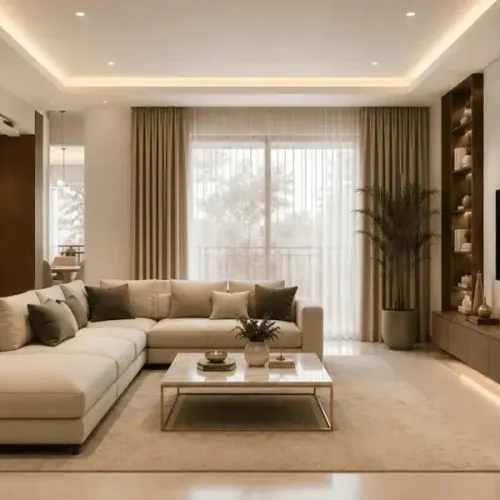
In a home, the North-West may be considered for guest rooms, certain bedrooms, living areas, storage, or other spaces depending on the overall layout.
In commercial properties, the direction may be relevant to movement, communication, customer interaction, logistics, and changing business activity.
However, a balanced North-West does not mean creating constant movement or instability. The objective is to create a space that allows healthy circulation while still providing comfort, organisation, and functional stability.
Understanding the North-West Direction in Vastu can help homeowners and property owners make more thoughtful decisions about room placement, airflow, movement, colours, furniture, and the use of space.
The North-West is traditionally known as Vayu Kon, meaning the corner of Air.
The direction is formed by the meeting of North and West.
It is traditionally associated with qualities such as:
The Air element is naturally dynamic. It moves, circulates, changes direction, and connects different areas.
This symbolic quality is reflected in the types of spaces often associated with the North-West, including:
In practical architecture, the North-West also reminds us of the importance of:
Vayu and the North-West
The North-West is traditionally associated with Vayu, the deity or principle of Air.
Air represents:
From a practical perspective, these qualities can be connected with airflow and movement through a building.
A poorly ventilated space can feel:
Good ventilation, on the other hand, can improve comfort and the overall experience of a room.
Moon and the North-West
Some Vastu traditions associate the North-West with the Moon.
The Moon is traditionally linked with:
This traditional association complements the dynamic nature of the North-West.
In modern terms, a well-designed North-West area should ideally support flexibility without creating unnecessary disorder.
The North-West is traditionally associated with the Air element, known as Vayu.
Air represents:
Air is essential for life, but its movement must remain balanced.
Too little air can create a stagnant and uncomfortable environment. Excessive uncontrolled airflow can create discomfort and instability.
The same principle can be applied to spatial planning.
A balanced North-West should ideally have:

The North-West is traditionally connected with areas of life involving movement and change.
Communication
Because Air moves between places, the North-West is symbolically associated with communication and interaction.
In a modern home, this may relate to:
Travel and Movement
The North-West is traditionally connected with travel and transition.
This makes it symbolically relevant to people whose lifestyles involve frequent movement or changing circumstances.
Relationships
The direction may be associated with social interaction and relationships outside the immediate family structure.
A comfortable guest room or social space can support a welcoming environment.
Business Connections
In commercial environments, movement and communication are important for:
Adaptability
The Air element is constantly moving and changing.
The North-West therefore represents the ability to adapt to changing situations rather than remaining fixed in one position.
Mental Flexibility
A well-ventilated and comfortable environment can contribute to a feeling of mental freshness.
This should not be understood as a guaranteed psychological effect of a direction. Instead, natural light, airflow, room comfort, and a well-planned environment can all influence how people experience a space.
Guest Bedroom
The North-West is traditionally considered suitable for a guest bedroom in many Vastu layouts.
This is often connected with the dynamic nature of the direction.
A guest room in this zone can provide:
The room should be designed for actual comfort rather than relying solely on directional rules.
Bedroom
A North-West bedroom may be suitable for certain occupants depending on the overall layout.
The room should have:
A room that is too exposed to noise, drafts, or excessive movement may not provide good rest.
Living Room
The North-West can be suitable for a living room in some property layouts.
Because living rooms involve movement and interaction, the direction’s association with circulation can be relevant.
The layout should provide:
A workspace should also support ergonomic requirements and natural ventilation.
Dining Area
A dining area may be located in the North-West depending on the floor plan.
The space should prioritise:
Kitchen
The South-East is traditionally associated with the Fire element and is often preferred for the kitchen.
A North-West kitchen may exist in many modern properties.
In such cases, the focus should be on:
An existing kitchen should not be demolished simply because it is located in the North-West.
Garden and Outdoor Spaces
The North-West can be used for outdoor areas depending on the property.
A garden in this zone should have:
Because the direction is traditionally associated with Air, avoid allowing the space to become completely blocked by dense, unmanaged growth.
Office or Meeting Space
The North-West may be considered for spaces involving communication and interaction.
Examples include:
The exact placement should depend on the property’s overall layout and business function.
Bathroom
A North-West bathroom should be planned with attention to:
Pooja Room
The North-East, East, or other suitable locations may traditionally be preferred for a pooja room.
A North-West pooja space should be assessed as part of the complete layout.
Parking
Parking may be placed in the North-West depending on access and the overall site plan.
The area should allow vehicles to enter and leave safely without obstructing the main building.
Staircase
A staircase may be located in the North-West depending on the structural design and overall plan.
The primary considerations should include:
The traditional association of the North-West with Air can be understood through practical environmental design.
Air needs movement.
A well-designed North-West area may benefit from:
A room with poor airflow may feel stagnant and uncomfortable. Similarly, a space filled with unnecessary furniture may restrict movement.
This is why the North-West benefits from a balance between openness and organisation.
However, excessive openness is not always beneficial.
A bedroom, for example, requires privacy and comfort. A living room requires movement but also comfortable seating. A guest room needs both flexibility and rest.
Good Vastu planning should therefore consider the actual purpose of the room.

The North-West generally suits light, airy, and neutral colour palettes.
Possible options include:
These colours can help create a visually light and spacious atmosphere.
Avoid making the entire area excessively dark or visually heavy unless the room’s natural light and interior design require it.
Suitable materials may include:
The final colour choice should be based on:
Traditional Vastu interpretations sometimes associate an imbalanced North-West with:
These experiences can also be caused by practical factors such as:
A responsible Vastu assessment should consider these real-world factors.
Improve Airflow
Consider:
Declutter the Area
Remove:
Use Light Colours
White, cream, light grey, soft blue, and other light tones may help create a visually airy environment.
Rearrange Furniture
Create clear movement pathways.
Avoid placing large furniture in a way that blocks:
Use Suitable Natural Materials
Light wood, glass, natural fabrics, and suitable metal accents can create a balanced interior.
Add Plants Carefully
Plants may be used where there is adequate light and proper maintenance.
Avoid creating an overly dense indoor environment that restricts movement and airflow.
Improve Natural Light
Use:
Use Mirrors Carefully
Mirrors should be positioned based on what they reflect and the function of the room.
Avoid placing mirrors where they create visual discomfort or reflect clutter.
Consider Traditional Remedies
Depending on the complete layout, some homeowners may use:
These should be considered supportive traditional remedies rather than replacements for practical improvements.
Review Room Usage
If the North-West is being used as a storage dump, consider whether it can be converted into a more suitable:
Avoid Unnecessary Demolition
Many concerns can be addressed through:
The correct solution depends on the complete property layout.
The North-West is traditionally called Vayu Kon because it is associated with Vayu, the Air element. Air represents movement, circulation, communication, flexibility, and change. These qualities form the traditional foundation for understanding this direction in Vastu Shastra.
A guest bedroom is traditionally considered suitable for the North-West in many Vastu layouts. Living rooms, certain bedrooms, communication spaces, and other areas involving movement may also be suitable depending on the complete property plan.
A North-West bedroom can be suitable depending on the occupant and the overall layout. Good ventilation, comfortable temperature, privacy, natural light, and a restful environment are important factors.
White, cream, light grey, silver, soft blue, pale green, and light beige may suit the North-West. The final choice should also consider the room’s natural light, size, function, and interior style.
Avoid excessive clutter, unnecessary heavy furniture, broken objects, and items that block doors or windows. The North-West should allow comfortable circulation while remaining organised and functional.
Practical remedies may include improving ventilation, decluttering, rearranging furniture, improving lighting, changing colours, removing obstructions, and adjusting room usage. The correct remedy depends on the exact nature of the concern.
A North-West entrance may be suitable in some properties. Its exact location, door placement, approach, surrounding environment, and complete floor plan should be assessed instead of judging the entrance solely by its broad directional zone.
A North-West kitchen can exist in a modern property. The South-East is traditionally associated with the Fire element, but an existing North-West kitchen should be assessed practically through ventilation, heat management, electrical safety, plumbing, and workflow before considering any major change.
The North-West Direction in Vastu (Vayu Kon) is traditionally associated with Air, movement, communication, flexibility, travel, relationships, and change.
A balanced North-West should allow comfortable circulation without becoming chaotic or unstable. Good airflow, appropriate room usage, clear pathways, natural light, and thoughtful furniture placement can all contribute to a more comfortable environment.
The traditional association with the Air element can also be understood through practical principles such as ventilation, movement, environmental comfort, and spatial openness.
However, no direction should be assessed in isolation. The complete property layout, orientation, room usage, construction, natural environment, and the needs of the occupants all matter.
If you are concerned about a North-West Vastu defect, avoid making immediate structural changes based on a single rule. A professional assessment can help identify whether the concern relates to airflow, clutter, room placement, privacy, movement, or another aspect of the property.
Your Vastu Experts can help you understand the role of the North-West direction within the complete spatial framework of your home, office, commercial space, or industrial property.
Book a personalised consultation with Your Vastu Experts for practical Vastu guidance based on your property’s orientation, layout, and individual requirements.
Explore the Other Directions in Vastu
The North-West is one part of the complete directional framework of Vastu Shastra. Explore the remaining directions to understand how each zone contributes to the broader balance of a property
Any trademark, brand name, or logo displayed on this website is solely for informational purposes to provide accurate and up-to-date details about the respective brand. Displaying such content does not imply any affiliation, endorsement, or partnership with the brand. All trademarks, names, and logos remain the property of their respective owners.
Transform your home and workspace with the power of Vastu. Our expert consultations help you align your environment for health, prosperity, and peace of mind.
© Your Vastu Experts
WhatsApp us