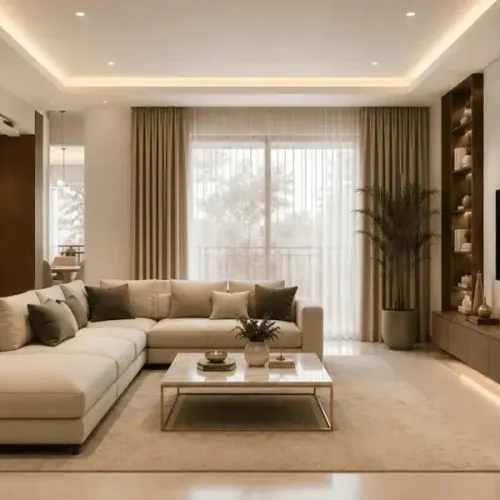
The North Direction in Vastu, known as Uttar Disha, holds an important place in traditional Vastu Shastra. It is commonly associated with wealth, opportunities, movement, communication, and financial growth. For this reason, the North zone of a home, office, shop, or commercial property deserves careful attention during planning and interior arrangement.
In traditional Vastu, the North is associated with Lord Kubera, the deity traditionally connected with wealth and prosperity, and the planet Mercury (Budha). These associations give the direction a strong connection with financial activity, intellect, communication, business, and professional opportunities.
However, a North-facing property is not automatically considered perfect, nor does a North-facing entrance guarantee financial success. The overall layout, proportions, surrounding environment, room placement, natural light, ventilation, and relationship between different directions all matter. Vastu works best when viewed as a complete system of spatial planning rather than as a single rule.
Understanding the North direction can help homeowners and business owners make more informed decisions about entrances, offices, living areas, financial spaces, and the overall flow of a property.
The North direction is called Uttara Disha in Sanskrit and traditional Indian terminology. The word Uttara is commonly understood as “North” and is also associated with the idea of upward movement, progress, or a higher direction.
In the Vastu Purusha Mandala, the North represents a zone traditionally connected with opportunity, prosperity, movement, and the circulation of resources. Its symbolism is particularly relevant to homes and workplaces where financial activity and professional growth are important.
From a practical perspective, the North can also be viewed as a direction that benefits from careful planning for light, ventilation, accessibility, and movement. Keeping this area open and functional often makes a space feel more inviting and easier to use.
Lord Kubera and the North Direction
According to traditional Vastu beliefs, Lord Kubera is associated with the North direction. Kubera is traditionally regarded as the guardian or treasurer of wealth.
This is why the North is often called the Kubera direction or the wealth zone in Vastu. Traditionally, a balanced North is believed to support opportunities, financial movement, prosperity, and resource management.
From a practical viewpoint, this symbolism can be translated into thoughtful planning for:
Mercury and the North Direction
The North is also traditionally associated with Mercury (Budha). In Vastu and related Indian traditions, Mercury is connected with intellect, communication, calculation, business, learning, and analytical thinking.
This makes the North particularly relevant to professions and activities involving:
These associations should be understood as traditional symbolism rather than a guarantee of specific outcomes.
The North direction is traditionally associated with the Water element (Jal Tatva).
Water represents movement, flow, adaptability, and circulation. In Vastu symbolism, these qualities are often connected with the movement of opportunities and resources.
This relationship also offers a practical way to understand the direction. Water must flow rather than remain stagnant. Similarly, spaces associated with financial and professional activity benefit from good organisation, accessibility, and efficient movement.
A balanced North should therefore avoid unnecessary heaviness, clutter, and obstruction wherever possible.
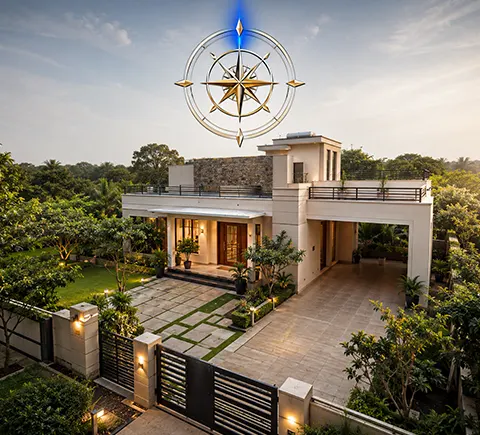
The North direction is primarily connected with areas of life involving wealth, career, business, communication, and opportunities.
Wealth and Financial Flow
The North is traditionally linked with income, financial opportunities, and prosperity. This is why many Vastu consultations pay close attention to the North zone when clients are concerned about financial planning or business growth.
A clean, accessible, and well-maintained North can also create a psychologically positive environment for financial activities.
Career and Professional Growth
The North can be especially important for people involved in business, finance, communication, technology, consulting, and professional services.
A well-planned workspace in this zone may support a sense of openness and movement, helping create an environment that feels suitable for work and decision-making.
Business and Opportunities
For commercial properties, the North may be considered for reception areas, customer interaction zones, accounts departments, sales activities, or other functions involving movement and communication.
The exact placement should always be assessed in relation to the complete floor plan.
Office and Commercial Areas
In commercial properties, the North may be considered for:
The most suitable placement depends on the business type and complete property layout.
Living Room
The North can be suitable for a living room where the space receives good daylight and ventilation.
An open living area in this zone can encourage:
Study Room or Home Office
The North can be a suitable location for a study room or home office, particularly for activities involving communication, analysis, writing, finance, or business.
Keep the desk organised and ensure that the room has comfortable lighting and ventilation.
Bedroom
A bedroom can be placed in the North depending on the size, occupants, and overall design of the property. However, bedroom placement should not be decided solely by direction.
The age, lifestyle, profession, and requirements of the occupants should also be considered.
Kitchen
The North is generally not the first choice for the main kitchen in traditional Vastu planning because the kitchen is strongly associated with the Fire element. The South-East is traditionally preferred for the kitchen, with the North-West often considered an alternative in some layouts.
However, existing apartments cannot always follow ideal placement. Practical corrections should be considered only after reviewing the complete floor plan.
Pooja Room
A pooja room is often given preference in the North-East, East, or other suitable zones depending on the layout. The North may be appropriate in some properties, but the exact placement should be evaluated alongside the North-East and centre of the home.
Bathroom
Bathrooms require careful placement because water drainage, ventilation, moisture, and hygiene are important practical concerns. A North bathroom should not automatically be considered a defect without examining the complete layout, plumbing arrangement, and surrounding zones.
Staircase
Heavy structural elements such as staircases should be planned with the complete building layout in mind. Their placement should not unnecessarily block the North or create excessive congestion in an otherwise open area.
Water Storage and Open Areas
Water-related features should be planned according to the overall Vastu layout and practical drainage requirements. Open areas in the North are traditionally preferred over heavy, congested construction.
Garden and Parking
A garden or carefully planned open space can help keep the North feeling light and accessible. Parking may also be possible, depending on the property’s layout and circulation requirements.
Entrance
A North entrance can be suitable in Vastu planning, provided its exact placement and relationship with the rest of the layout are considered.
A good entrance should be:
The entrance is also the first point of interaction between a property and its surroundings, so its design influences both practical movement and psychological impressions.
Traditional Vastu recommendations for the North can also be understood through practical design principles.
An open North can support:
In many modern homes, cluttered areas feel psychologically heavy. Clear pathways and open views can create a sense of calm and accessibility.
Similarly, a well-planned office or reception area can improve how people move through a property. These practical factors complement the traditional symbolism of the North as a direction associated with movement and opportunity.
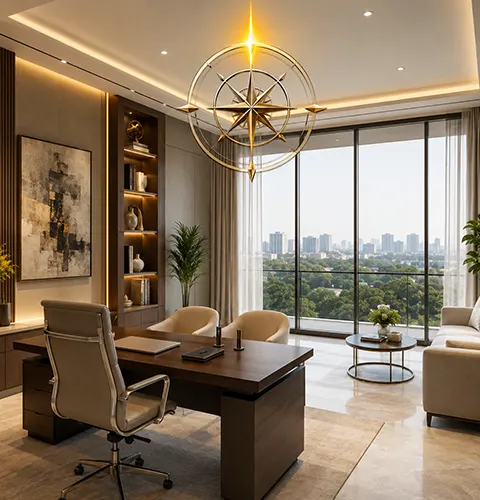
The North is traditionally associated with colours connected with the Water element and Mercury.
Suitable choices include:
These colours can be introduced through:
Natural materials such as light wood, glass, and subtle metallic finishes can also complement the direction.
Avoid making the space excessively dark or visually heavy. The aim is to create a balanced environment rather than follow a single colour rule rigidly.
Common North direction concerns include:
Traditionally, an imbalanced North is sometimes associated with:
These should not be treated as automatic proof of a Vastu defect. Financial or personal challenges have many possible causes. A professional Vastu assessment should consider the entire property rather than blaming one direction.
Most remedies should be selected only after understanding the complete layout.
The North can be suitable for a living room, study room, home office, reception area, or certain commercial functions. The best choice depends on the complete floor plan, the occupants, the property type, and the relationship between different directions.
In traditional Vastu, the North is associated with Lord Kubera and is linked with wealth, opportunities, and financial movement. However, a North-facing or open North does not guarantee financial success. The overall layout and practical financial decisions remain important.
Light green, mint green, soft blue, pale turquoise, white, and light grey are commonly associated with the North. The final colour should also suit the property’s lighting, interior design, climate, and overall colour scheme.
Avoid unnecessary clutter, broken items, excessive heavy storage, and poorly maintained spaces. The North should ideally remain clean, accessible, and visually light wherever the property layout allows.
A North-facing house can be suitable according to traditional Vastu principles, but the direction of the entrance alone does not determine whether a property is well planned. The entrance position, internal layout, plot shape, slopes, surrounding environment, and room placement should all be assessed together.
Many improvements can be made without demolition. These may include decluttering, improving lighting and ventilation, rearranging furniture, repairing leaks, using suitable colours, and correcting functional obstructions. The appropriate remedy depends on the specific defect and the overall layout.
Yes. Vastu principles can be considered in apartments, although structural changes may be limited. A practical assessment can focus on the apartment’s entrance, internal layout, directions, room usage, natural light, ventilation, and available non-structural remedies.
The North Direction in Vastu (Uttar Disha) is traditionally associated with wealth, career opportunities, communication, and financial movement. Its connection with Lord Kubera, Mercury, and the Water element gives it an important place in Vastu Shastra.
For modern homeowners, however, the value of North direction planning goes beyond symbolism. A clean, well-lit, accessible, and thoughtfully organised North can contribute to better movement, visual openness, natural comfort, and practical use of space.
The most important principle is balance. A North direction cannot be evaluated in isolation from the South, East, West, corners, centre, and overall structure of the property. A solution that works for one home may not be suitable for another.
If you are building a new property, purchasing a home, planning an office, or dealing with a specific Vastu concern, a personalised assessment can provide more useful guidance than applying generic remedies.
Your Vastu Experts can help you understand how the North direction interacts with the complete layout of your home, office, commercial property, or industrial space. For practical and personalised guidance based on your property’s orientation and design, contact Your Vastu Experts to explore a professional Vastu consultation.
Book a personalised consultation with Your Vastu Experts and receive practical Vastu guidance tailored to your space, layout, and specific requirements.
Understand Every Direction in Vastu
The North direction is only one part of a property’s complete directional layout. Explore the other seven directions to understand how each zone contributes to the broader principles of Vastu Shastra and spatial planning.
Any trademark, brand name, or logo displayed on this website is solely for informational purposes to provide accurate and up-to-date details about the respective brand. Displaying such content does not imply any affiliation, endorsement, or partnership with the brand. All trademarks, names, and logos remain the property of their respective owners.
Transform your home and workspace with the power of Vastu. Our expert consultations help you align your environment for health, prosperity, and peace of mind.
© Your Vastu Experts
WhatsApp us