
The bedroom is one of the most private and frequently used spaces in a home, making its location and layout important when planning a Vastu-conscious residence. Traditional Vastu gives particular attention to the direction of the bedroom, the position of the bed, sleeping orientation, colours and the relationship between the bedroom and other areas of the house.
If you are designing a new home or simply want to make your existing bedroom more Vastu-conscious, you do not necessarily need to make major structural changes. Many traditional recommendations relate to how furniture, doors, windows and everyday objects are arranged.
This Bedroom Vastu Guide explains the commonly followed principles in simple, practical terms while recognising that Vastu is a traditional spatial practice rather than a scientifically proven system.
Which Direction Is Best for a Bedroom According to Vastu?
The ideal bedroom direction can vary depending on who uses the room and the overall floor plan.
For a master bedroom, the southwest is traditionally considered one of the preferred locations. Vastu practitioners often associate this zone with stability and grounding.
The west is also commonly considered suitable for bedrooms, while other directions may be recommended depending on the occupants and property layout.
Rather than assuming that one direction is universally “good” or “bad”, consider the complete arrangement of the house.
Important factors include:
- The location of the bedroom within the property
- The direction of the room
- Door and window placement
- Bed position
- Furniture arrangement
- Natural light and ventilation
- Relationship with bathrooms, kitchen and other rooms
For a broader understanding of directional principles, readers can explore the Eight Directions in Vastu.
Master Bedroom Vastu
The master bedroom usually receives particular attention in traditional Vastu planning because it is generally occupied by the homeowners.
The southwest is commonly recommended for the master bedroom. Traditional Vastu associates this area with stability and a sense of grounding.
Where the southwest is not available, the west can be considered depending on the overall floor plan.
For an existing property, there is no need to assume that a master bedroom located elsewhere automatically creates a problem. A room should be assessed within the context of the entire house.
Where Should the Bed Be Placed?
Bed placement is one of the most important practical aspects of bedroom Vastu.
Traditional Vastu commonly recommends placing the bed so that the head is towards the south or east while sleeping. The exact recommendation may vary between Vastu traditions and individual practitioners.
The bed should ideally have a solid wall behind the headboard rather than being positioned directly in the middle of the room.
From a practical perspective, also make sure that:
- There is enough space to move around the bed
- Doors can open without hitting furniture
- Windows and ventilation are not blocked
- Electrical cables are kept organised
- The bed does not obstruct natural circulation
A comfortable layout should always remain a priority.
Sleeping Direction According to Vastu
Sleeping direction is another frequently searched aspect of Vastu.
According to traditional Vastu principles, sleeping with the head towards the south is commonly recommended for adults. East is also traditionally considered suitable, particularly in some Vastu interpretations.
North is generally discouraged as a sleeping direction in traditional Vastu.
These recommendations belong to traditional Vastu practice and should not be presented as guaranteed health effects. Good sleep also depends on factors such as room temperature, lighting, noise, mattress comfort and personal routine.
Bedroom Door Vastu
The bedroom door should allow easy movement into and out of the room.
Traditional Vastu considers the position and direction of doors when evaluating a floor plan. However, there is no need to compromise practical accessibility or safety simply to follow a generic rule.
Try to ensure that:
- The doorway is not blocked by furniture
- The door opens smoothly
- The entrance is well maintained
- The room has adequate privacy
- The door does not create unnecessary obstruction around the bed
The relationship between the bedroom entrance and the rest of the home can also be considered as part of a broader Vastu assessment.
Bedroom Windows and Ventilation
A comfortable bedroom requires adequate airflow and natural light.
Where possible, windows should provide sufficient ventilation without compromising privacy, security or energy efficiency.
Traditional Vastu also considers the placement of openings in relation to directions. However, practical building requirements should remain important.
A bedroom that is well ventilated, naturally lit during the day and appropriately dark at night can contribute to a more comfortable living environment regardless of Vastu considerations.
Bedroom Colours According to Vastu
Colour recommendations in Vastu are generally connected with the desired character of a space.
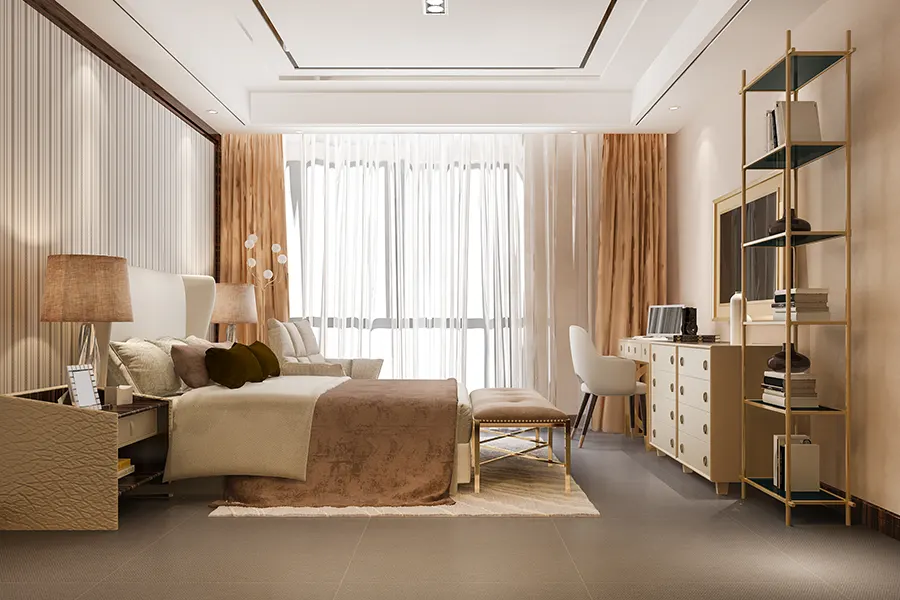
For bedrooms, softer and calmer shades are often preferred. Depending on the overall interior design, these may include:
- Cream
- Beige
- Light green
- Soft peach
- Muted pink
- Light earthy tones
- Warm off-white
You do not have to redesign the entire room around a particular colour. Wall paint, bedding, curtains, rugs and decorative accents can all be used to create a balanced palette.
Very intense colours may dominate a small bedroom, so consider the room’s size and natural lighting before choosing an accent colour.
Mirror Placement in the Bedroom
Mirrors are another common subject in Vastu discussions.
Traditional Vastu practitioners often advise being careful about mirror placement, particularly when a mirror directly reflects the bed.
If possible, place mirrors where they are useful without creating an uncomfortable reflection while you are resting.
This also has a practical interior-design advantage: a large mirror positioned thoughtfully can make a room appear more spacious, while an awkwardly positioned mirror may make the room feel visually busy.
Electronics and Clutter
Modern bedrooms often contain televisions, computers, chargers and other electronic devices.
From a practical perspective, keeping unnecessary electronics away from the immediate sleeping area can help create a calmer environment and reduce visual clutter.
Traditional Vastu also generally favours organised, uncluttered spaces.
Consider:
- Removing unused items from bedside tables
- Keeping cables organised
- Avoiding excessive storage under the bed
- Repairing or removing broken objects
- Keeping wardrobes and drawers organised
These are simple changes that can improve the appearance and usability of almost any bedroom.
Bedroom and Bathroom Placement
Many modern bedrooms include an attached bathroom. Traditional Vastu considers the relationship between these spaces when assessing a floor plan.
However, plumbing, waterproofing, ventilation and hygiene are essential practical considerations.
If you are designing a new property, assess the bedroom and bathroom together rather than treating them as completely independent spaces.
For readers reviewing other water-related areas of the home, our Bathroom Vastu guide can provide additional residential Vastu context.
Bedroom Vastu for Children
Children’s bedrooms may be planned differently from the master bedroom.
Traditional Vastu sometimes recommends the west, north or other directions depending on the child’s age and the purpose of the room.
Regardless of the Vastu approach, a child’s bedroom should provide:
- Good natural light
- Safe furniture
- Adequate storage
- Comfortable sleeping space
- A suitable study area
- Good ventilation
- Enough open floor space
A practical and adaptable room is particularly important as children’s needs change over time.
Common Bedroom Vastu Mistakes to Avoid
Some of the most common mistakes occur when homeowners follow isolated Vastu rules without considering the complete room.
Avoid:
- Placing the bed where movement around it becomes difficult
- Blocking windows with large furniture
- Allowing clutter to accumulate
- Ignoring ventilation
- Using uncomfortable furniture simply because of a Vastu recommendation
- Making expensive structural changes based on one isolated rule
- Treating Vastu guidelines as guarantees of health, wealth or relationship outcomes
Traditional Vastu is best approached as a framework for spatial planning rather than a substitute for sound architectural and interior-design decisions.
How the Five Elements Relate to Bedroom Vastu
Vastu Shastra is traditionally based on the Pancha Bhootas, or five elements: Earth, Water, Fire, Air and Space.
These elements are traditionally connected with different directions and spatial qualities. The bedroom can therefore be considered within this broader framework rather than as an isolated room.
Readers who want to understand this foundation can explore the Five Elements of Vastu before applying room-specific principles.
Can You Improve an Existing Bedroom Without Renovating?
Yes. Many Vastu-conscious changes do not require structural work.
You can start with simple adjustments such as:
- Reviewing the bed's position.
- Keeping the room uncluttered.
- Improving natural ventilation.
- Organising wardrobes and storage.
- Choosing a calm colour palette.
- Reviewing mirror placement.
- Keeping the entrance and movement areas clear.
- Maintaining furniture and fixtures properly.
If a structural issue is significant, assess it with a qualified architect or Vastu professional rather than making changes based solely on a generic online recommendation.
Creating a Calm and Balanced Bedroom
A well-planned bedroom should ultimately feel comfortable, private and restful. Traditional Bedroom Vastu adds another perspective by considering direction, placement, proportions and the relationship between different spaces.
The southwest is commonly associated with the master bedroom, while bed placement, sleeping orientation, ventilation, colours and clutter are also frequently discussed in Vastu practice.
However, there is no need to approach these principles with fear. If your existing bedroom does not follow every traditional recommendation, focus first on practical improvements that make the space more comfortable and functional.
A thoughtful bedroom combines traditional spatial principles with good design, ventilation, safety and the actual needs of the people living in the home.

Nidhhi Trikhaa is the founder of Your Vastu Experts and a dedicated Vastu consultant committed to helping individuals and businesses create harmonious living and working environments. With extensive experience in Vastu principles and energy balancing, she provides practical, personalized solutions aimed at enhancing prosperity, well-being, and success. Through her guidance, clients gain a deeper understanding of how spatial alignment can positively influence various aspects of life.